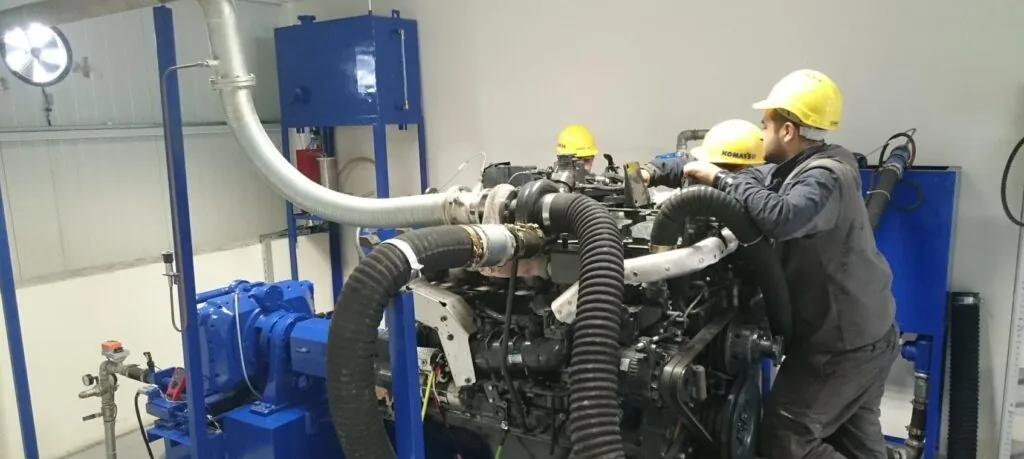
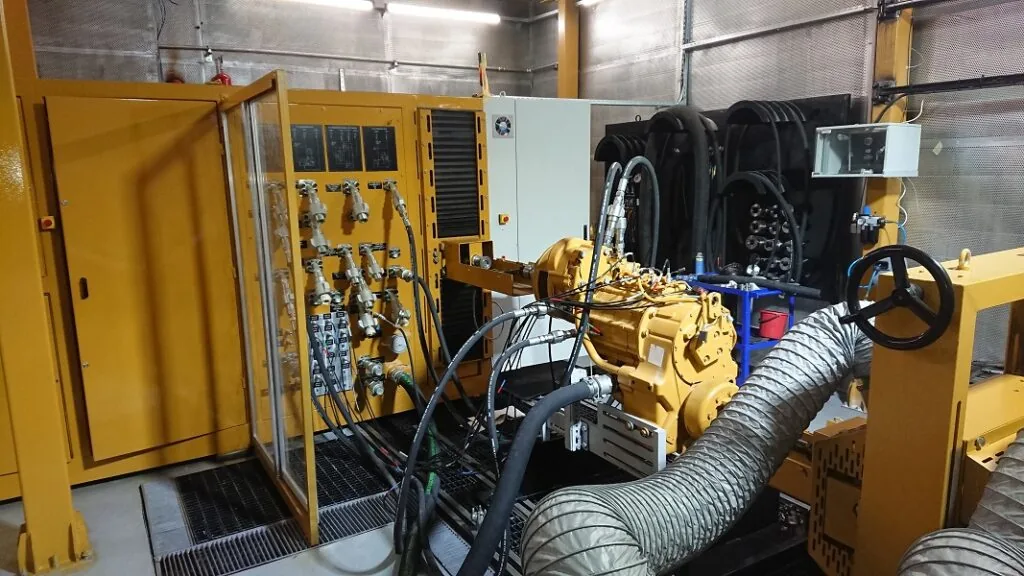
TRANSMISSION TEST SYSTEMS
We build the dynamometers, mechanics and control for transmission testing in-house — from a driven functional check to a fully loaded performance and durability bench — under single-source responsibility.
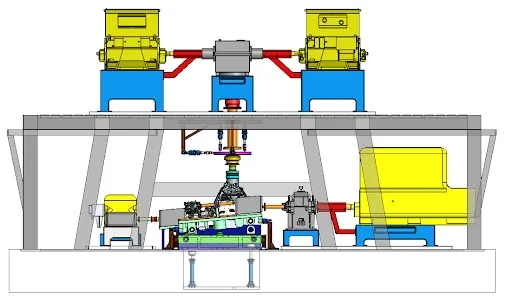
A transmission test dynamometer is configured around what the test has to prove. The input side is driven by an active dynamometer in the clockwise and counter-clockwise directions; the output side is either left free or loaded, depending on the test.
Active input drive in both directions, no output load. Shift sequence, direction change and condition checks against fixed limits, with a report per unit.
Active input drive with eddy-current or active dynamometers loading the output. Input and output torque measured for ratio, efficiency and loss maps.
Active dynamometers on input and output, with regenerative energy recovery for long runs and dynamic load profiles.
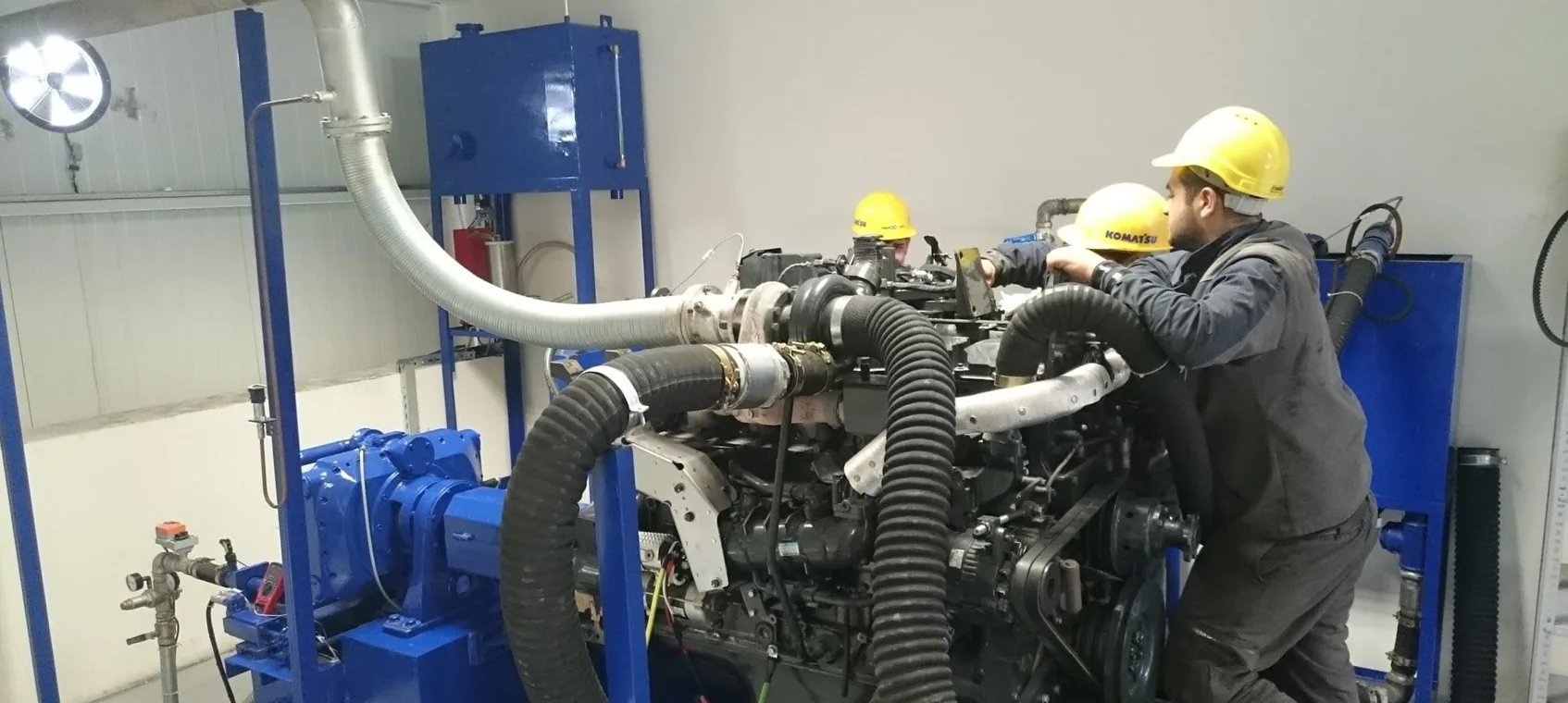
Dynamometers, shaft line, adapters and control come from one team. We take responsibility from design through commissioning.
Most of the engineering in a transmission bench is in the shaft line. We design and manufacture the mechanical system together with the dynamometers, so alignment, inertia and speed limits are resolved at design stage.
TRex runs the speed and torque loops, the shift and clutch actuators and the test recipe, and issues the report. Channel resolution is 16-bit.
Production and end-of-line testing, post-overhaul quality control, R&D and durability testing, and hub drive loading for wheeled and tracked vehicles. The same TRex platform used on our engine benches runs the transmission bench, so operators work with one system across the facility.
Typical configuration: an overhaul workshop tests every repaired transmission before delivery. An active dynamometer drives the input through a fixed shift sequence in both directions, temperatures and pressures are checked against limits, and TRex issues a pass/fail report for each serial number.
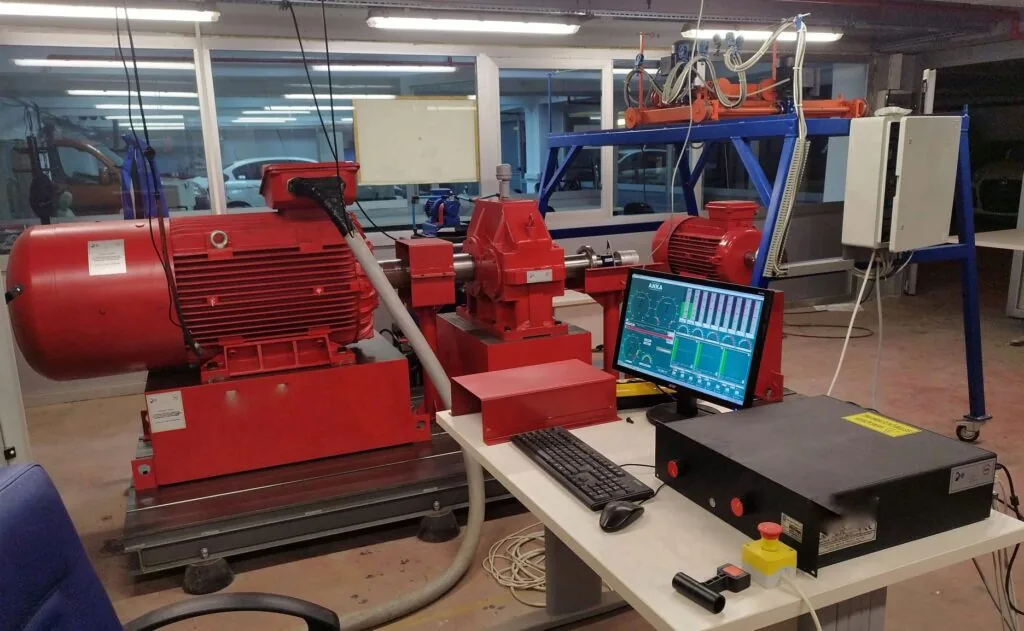
The same TRex platform runs engine and transmission benches, so operators work with one system across the facility.
It drives the transmission at a controlled speed and direction and, where the test requires it, loads the output. Input and output torque and speed are measured, so ratio, efficiency and losses can be calculated alongside temperatures, pressures and vibration.
No. Functional and end-of-line checks are typically run with an active dynamometer driving the input in both directions and no output load. Performance, efficiency and durability tests add eddy-current or active dynamometers on the output side.
Manual and automatic gearboxes, reducers and hub drives for wheeled and tracked vehicles. Each product type gets its own connection adapters and carrier, so changeover between types is a mechanical routine rather than a rebuild.
Yes. Gear-shift and clutch actuators are controlled by TRex, so shift sequences run as part of the test recipe and are repeated identically on every unit.
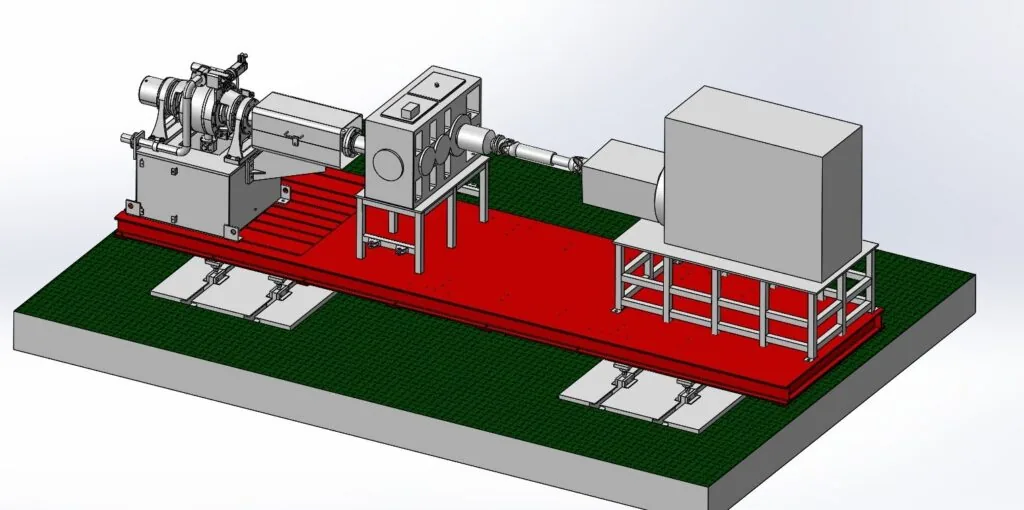
As Türkiye’s only domestic hydraulic dynamometer manufacturer, we design, build and commission the complete test system in Istanbul, from the dynamometer to the control software.
Send us the torque and speed envelope, the tests you plan to run and your facility constraints. Our engineers reply within one business day.
Request a Quote